
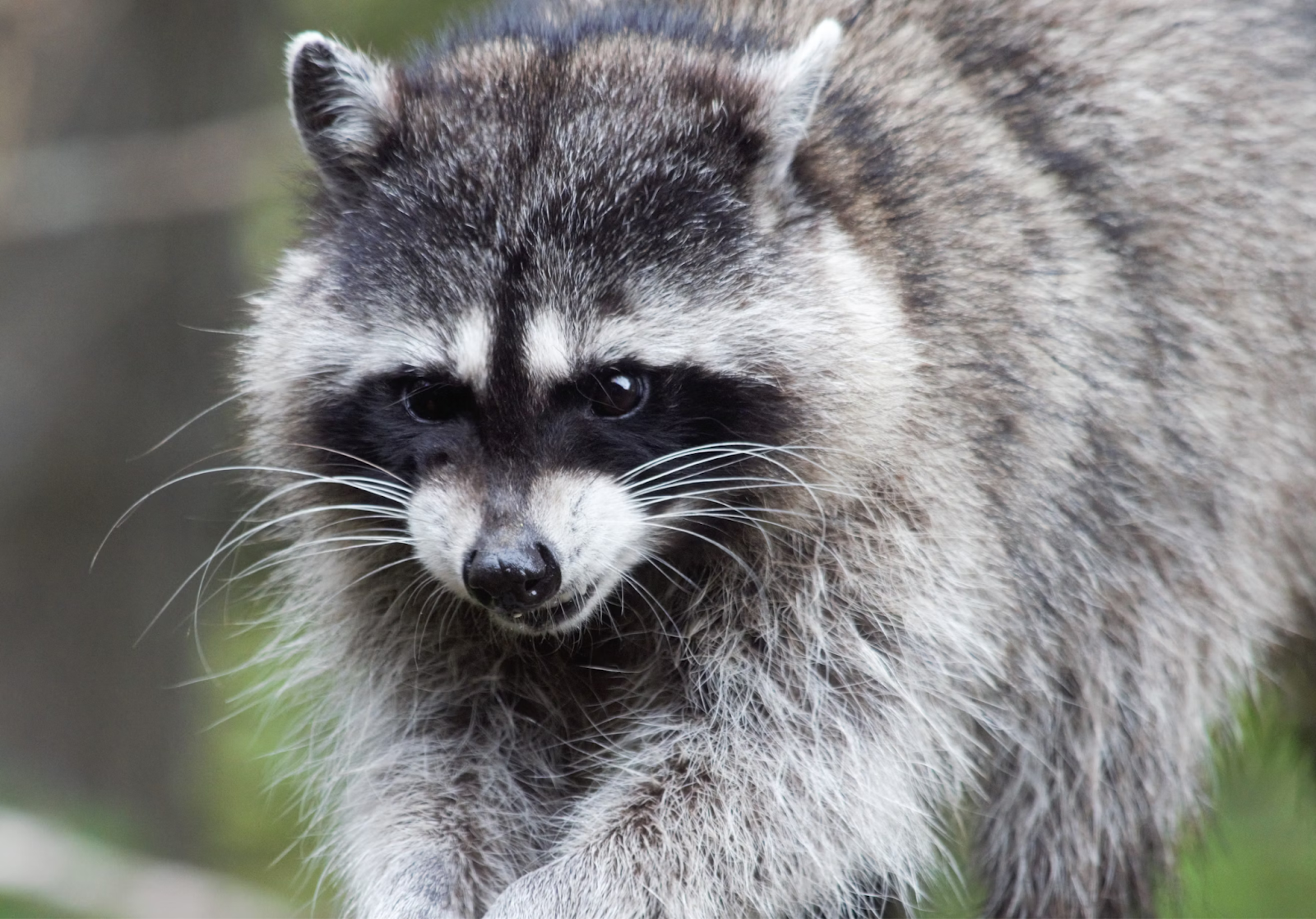
Raccoon droppings pose serious health and environmental risks, requiring increased vigilance. This waste, often carrying parasitic and bacterial diseases, can contaminate your outdoor spaces. Learn how to identify these tracks to protect your family and pets.
This article, written by a raccoon capture specialist, helps you learn how to identify these tracks to protect your family and pets.
Decontamination after a raccoon has passed through is a sensitive step: the droppings may contain roundworm, a parasite that can be transmitted to humans. If the colony is still present, start with exclusion before cleaning. Our raccoon capture service takes care of the wildlife part, and the following steps cover identification and decontamination.
Why is raccoon droppings a hazard?
Raccoon droppings pose a serious threat to health and the environment. Often overlooked, they can lead to serious risks to humans and pets. It is better to understand the dangers associated with these droppings in order to adopt good practices.
To avoid an infestation, appropriate measures must be taken. Find out how to protect your home from raccoons by applying effective preventive solutions.
Health risks associated with feces (parasites, bacteria)
Raccoon droppings are important vectors of serious diseases, including parasitic disease caused by the parasite Baylisascaris procyonis. This parasite can infect humans through contact with contaminated feces, causing disorders such as eye disorders, kidney damage, or serious neurological complications. Children and pets, who are often curious, are particularly exposed to these risks.
In addition to parasites, bacteria in the droppings can lead to infectious diseases and respiratory complications . These contaminants can spread in human dwellings, especially if raccoon latrines are located close to living areas. Disposable gloves and a protective mask are essential during any handling to avoid direct contact.
Environmental impact of raccoon droppings
Beyond health issues, raccoon droppings also affect the environment. They can contaminate food sources, such as wild berries or birdseed, making these foods unsafe for consumption by wild animals or humans. Accumulating them in a small space, such as a barn or attic, can degrade materials and attract other pests.
To preserve a healthy environment, it is essential to monitor the presence of these droppings and to adopt appropriate measures to prevent their spread. Ignoring this problem can lead to a raccoon infestation, increasing the risks to the health and safety of the occupants.
In rural and semi-rural areas, for example for our exterminator clients in Saint-Jean-sur-Richelieu, raccoon latrines are typically found near sheds, under porches or on the flat roofs of agricultural outbuildings, where animals feel safe.
How to identify raccoon droppings?
Recognizing raccoon droppings is an essential step in preventing health and environmental risks. These droppings have specific characteristics that distinguish them from the excrement of other wild animals.
Visual characteristics of feces
Raccoon droppings usually come in a cylindrical shape and are about 2 to 3 centimeters long. They may contain visible fragments of wild berries, bird seeds, or food scraps ingested by the animal. Their color varies from brown to black, depending on the raccoons‘ diet.
A special feature of raccoon latrines is that they are grouped together in the same place. These areas, often located on rooftops, in attics or near trees, are strategic points used by nocturnal animals for their regular needs. The characteristic black rings around the raccoon’s eyes leave no doubt that they are present in these areas.
Signs of frequent presence
In addition to the droppings themselves, there are other signs that can signal a raccoon infestation. For example:
- Food scraps scattered around your home or garbage cans
- Scratches or paw marks on walls or windows
- A persistent foul smell from human habitation
These signs are often associated with an active raccoon population , especially in areas where food is abundant. It is recommended that you regularly inspect these areas for any signs of activity and protect your outdoor spaces and pets.
Properly identifying raccoon droppings allows you to act quickly and avoid contamination that could harm the health of your family and pets.
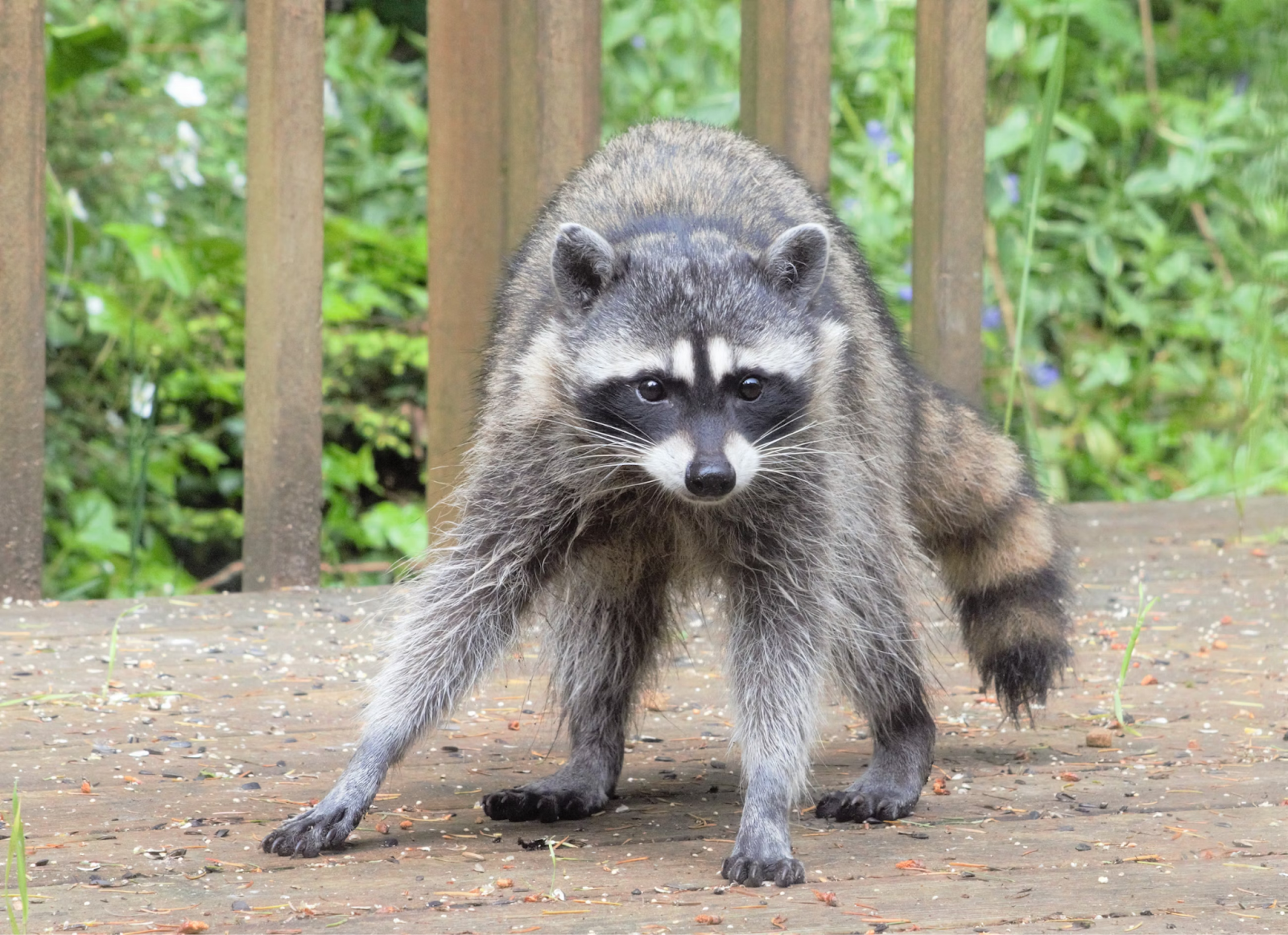
Before tackling the clean-up, a preliminary step is essential: understanding how the raccoon got in and how to get it out. Our detailed guide to catching a raccoon covers capture and exclusion techniques that comply with Quebec regulations.
What to do if raccoon droppings are found?
Faced with the discovery of raccoon droppings, you must act quickly to limit the health risks and protect your environment. An effective intervention helps to preserve the health of the occupants and avoid contamination of the premises.
Security measures to adopt immediately
As soon as you identify a raccoon latrine, certain precautions should be taken before attempting any cleaning. Wear disposable gloves and a protective mask to avoid direct contact with contaminated materials. These droppings can contain parasites and bacteria that can cause dangerous diseases, such as respiratory infections or communicable diseases.
Wash all touched surfaces thoroughly with a suitable disinfectant solution. It is also recommended to ventilate contaminated areas to reduce the concentration of suspended particles. If you have pets, keep them away from the premises immediately to prevent any risk of contamination.
Why call on extermination professionals?
Calling on a professional exterminator is the best solution to effectively treat a raccoon invasion and eliminate the associated droppings. The specialists have the expertise to identify the entry points of pests and seal them definitively.
Also, professionals use safe and environmentally friendly techniques to manage raccoon droppings and prevent their future accumulation. They can also advise you on preventive measures to adopt, such as reducing food sources and regularly maintaining at-risk areas.
For cases where the contamination is recent, blocking reintroductions is as strategic as cleaning up. Check out our recommendations for keeping raccoons away in the long term: garbage management, closing soffits, modifying the landscape around the property. For a complete professional intervention, our animal capture service combines exclusion, relocation and decontamination under the same contract.
Protect your environment with the right intervention
If raccoon droppings are discovered, prompt and appropriate action is essential to protect your family and property. Raccoon populations can cause significant damage and spread infectious diseases if left unchecked. Calling on experts allows you to secure your spaces while maintaining a healthy and safe environment. If you identify signs of invasion or raccoon latrines, call on our professional extermination services for quick and safe management.
For significant contamination, more than one square meter of latrine or a prolonged presence over several months, our decontamination department mobilizes technicians equipped with PPE in accordance with CNESST protocols, with prior wetting of the guano, HEPA suction and final disinfection.
Comparison of common animal feces in Quebec
The size and shape of the droppings quickly point to the right species. Five animals leave droppings comparable in size to the raccoon, but subtle clues can tell them apart.
| Animal | Typical Shape | Size | Visible Content | Layout |
|---|---|---|---|---|
| Raccoon | Tubular with truncated ends | 5 to 8 cm × 2 cm | Seeds, fruit fragments, eggshells | Community latrines, accumulations |
| Skunk | Tubular with pointed ends | 5 to 8 cm × 1 to 2 cm | Insect chitin, gravel, sometimes bones | Scattered on hunting routes |
| Medium Dog | Regular Cylindrical | 5 to 10 cm × 2 to 3 cm | Commercial Digested Food | Latrine Isolated |
| Cat | Elongated and thin | 3 to 5 cm × 1 cm | Digested hair, sometimes eggshells | Buried in the ground |
| Fox | Tubular Twisted | 5 to 8 cm | Hair, Feathers, Berries | Visible on High Dots |
The most reliable clue to identify the raccoon remains the community latrine: several dozen droppings accumulated in the same place, a distinctive sign of this species that shares its defecation sites with its family group.
Three typical cases of contamination
Isolated latrine discovered on a flat roof
Typical case of commercial or residential buildings with accessible flat roofs. A dozen to several dozen droppings accumulated in a corner, a sign of a raccoon that comes back regularly. Intervention: decontamination with complete PPE, disinfection with boiling water (roundworm eggs are resistant to chemical disinfectants), installation of an anti-perching device on the edge of the roof, verification of access to the building. Duration: half a day for decontamination, plus structural inspection.
Droppings scattered in an attic
More problematic: a sign of an active presence for several weeks or months. Cellulose or mineral wool insulation is likely deeply contaminated. Intervention by a specialized firm recommended: complete removal of the soiled insulation with HEPA vacuum cleaners, disinfection of the joists with boiling water, replacement with new insulation, capture of the raccoon if still present, permanent closure of the accesses. Significant cost.
Droppings in a family yard with children
Priority situation due to high parasite risk to children (Baylisascaris procyonis transmitted by hand-to-mouth contact). Immediate action: barricade the area, collect PPE, disinfect with boiling water, remove contaminated sandbox sand if necessary, medical supervision of children for 4 to 6 weeks (neurological signs). Complete inspection of the garden to identify other defecation sites.
The little-known risk of the roundworm
Baylisascaris procyonis is an intestinal worm specific to raccoons that poses a particular health risk in Canada. Three characteristics make it dangerous and justify strict precautions when handling excrement.
Exceptional environmental persistence
Roundworm eggs can survive in soil and on surfaces for 1 to 5 years depending on conditions, and more in cool, moist environments. They are resistant to desiccation, Quebec winter frost, most household disinfectants and even bleach. Only boiling and direct flame reliably destroy them.
Migration in the human body
When a human accidentally ingests eggs (hand-to-mouth contact after handling contaminated soil), the larvae migrate into the organs: liver, lungs, eye, and especially the brain. The cerebral form (larva migrans encephalitis) causes neurological damage that is sometimes irreversible, especially in children who often put their hands in their mouths.
When to see a doctor
Any documented exposure in a child (handling of soil in a known area of raccoon latrine, possible ingestion) warrants prompt consultation. Symptoms to watch for within 4 to 8 weeks: unexplained fatigue, disorientation, impaired coordination, vision loss. Preventive deworming with pyrantel or fenbendazole may be prescribed in the event of a strong suspicion of exposure, ideally within 3 days of contact.
Questions
What does raccoon droppings look like?
Raccoon droppings resemble those of a small dog: tubular, 5 to 8 cm long, 2 cm in diameter, dark brown to black. They often contain seeds, hairs, eggshell fragments or fruit chips depending on the animal’s diet. The raccoons defecate in specific places and return to the same site, creating latrines of several dozen accumulated droppings (on a roof, a log, a corner of a garage).
Why is raccoon droppings dangerous?
The droppings may contain Baylisascaris procyonis, a roundworm that is unique to raccoons. Eggs are resistant in the environment for several years and infect humans through hand-to-mouth contact after handling contaminated soil or surfaces. The migrating larva can reach the brain and cause severe encephalitis. Poop can also contain Salmonella, E. coli and Leptospira. Children and pets are most at risk.
How do you safely clean up raccoon droppings?
Five mandatory steps for safe cleaning:
- Wear full PPE : N95 mask, nitrile gloves, goggles and boots (to be discarded or disinfected afterwards).
- Moisten the droppings completely before handling them. Never stir dry: roundworm eggs disperse in the air.
- Pick up in a double sealable bag with a scoop reserved for this purpose. Seal and label clearly.
- Disinfect the surface with boiling water: Eggs are resistant to most chemical disinfectants.
- Burn wooden tools or throw them away. For more than 1 m² or accumulations in an attic, call a decontamination service.
How long do roundworm eggs stay dangerous?
Baylisascaris procyonis eggs can remain infectious in the soil and on surfaces for 1 to 5 years, and even longer in cool, moist conditions. They are resistant to desiccation, Quebec winter frost, and most household disinfectants. Only boiling and direct flame reliably remove them. For this reason, a latrine area should be treated even long after the raccoon has left, and children should not play in a yard where a raccoon has ever been there.
What if my dog licked raccoon poop?
Four immediate actions: monitor the dog for 2 to 3 weeks (neurological signs such as disorientation, loss of coordination, partial paralysis), contact the veterinarian to discuss preventive deworming (pyrantel or fenbendazole administered early can prevent infection), clean the latrine area to prevent further exposure, and wash the dog’s paws with soapy water. Humans who have touched the dog without washing their hands should also seek medical attention.
How many raccoons use the same latrine?
Community latrines are common: multiple pups from the same territory or family return to the same site, and a single location can accumulate droppings from 3 to 8 different individuals. Latrines are typically found on flat roofs, tree stumps, pool surrounds, and shed corners. Spotting a latrine almost always indicates regular activity in the area, warranting a thorough inspection of the property to identify access points.
When to call a decontamination service?
Three situations require professional intervention: accumulation of more than 1 m² of droppings (the risk of inhalation of eggs becomes significant during home cleaning), presence in an attic or closed space (concentration of spores and eggs in the air), and any confirmed human exposure (child who has put contaminated hands in his mouth, for example). A decontamination service equipped with HEPA vacuum cleaners and suitable products reduces the residual risk to a negligible level.
{ “@context”: “https://schema.org”, “@type”: “FAQPage”, “mainEntity”: [ { “@type”: “Question”, “name”: “À quoi ressemblent les excréments de raton laveur ?”, “acceptedAnswer”: “@type”: “Answer”, “text”: “Les déjections de raton laveur ressemblent à celles d’un petit chien : tubulaires, de 5 à 8 cm de longueur, 2 cm de diamètre, brun foncé à noir. Elles contiennent souvent des graines, des poils, des fragments de coquilles d’œufs ou des éclats de fruits selon le régime de l’animal. Les ratons défèquent à des endroits précis et reviennent au même site, créant des latrines de plusieurs dizaines de crottes accumulées (sur un toit, une bûche, un coin de garage).” }, { “@type”: “Question”, “name”: “Pourquoi les excréments de raton laveur sont-ils dangereux ?”, “acceptedAnswer”: “@type”: “Answer”, “text”: “Les déjections peuvent contenir Baylisascaris procyonis, un ascaris (ver rond) propre au raton laveur. Les œufs résistent dans l’environnement plusieurs années et infectent l’humain par contact main-bouche après manipulation de terre ou de surfaces contaminées. La larve migrante peut atteindre le cerveau et causer une encéphalite grave. Les crottes peuvent aussi contenir Salmonella, E. coli et Leptospira. Les enfants et les animaux domestiques sont les plus à risque.” }, { “@type”: “Question”, “name”: “Comment nettoyer en sécurité des excréments de raton laveur ?”, “acceptedAnswer”: “@type”: “Answer”, “text”: “Cinq étapes obligatoires : 1. Porter EPI complet (N95, gants nitrile, lunettes, bottes). 2. Humidifier les déjections (jamais brasser à sec, œufs d’ascaris se dispersent). 3. Ramasser dans sac scellable double, pelle dédiée. 4. Désinfecter à l’eau bouillante (œufs résistent aux produits chimiques). 5. Brûler ou jeter les outils en bois. Plus de 1 m² ou grenier : service de décontamination.” }, { “@type”: “Question”, “name”: “Combien de temps les œufs d’ascaris restent-ils dangereux ?”, “acceptedAnswer”: “@type”: “Answer”, “text”: “Les œufs de Baylisascaris procyonis peuvent rester infectieux dans le sol et sur les surfaces pendant 1 à 5 ans, et même plus dans des conditions fraîches et humides. Ils résistent à la dessiccation, au gel hivernal québécois, et à la plupart des désinfectants ménagers. Seules l’ébullition et la flamme directe les éliminent fiablement. C’est pour cette raison qu’une zone de latrines doit être traitée même longtemps après le départ du raton, et que les enfants ne devraient pas jouer dans une cour où un raton a déjà fréquenté.” }, { “@type”: “Question”, “name”: “Que faire si mon chien a léché des crottes de raton ?”, “acceptedAnswer”: “@type”: “Answer”, “text”: “Quatre actions immédiates : surveiller le chien pendant 2 à 3 semaines (signes neurologiques comme désorientation, perte de coordination, paralysie partielle), contacter le vétérinaire pour discuter d’un déparasitage préventif (le pyrantel ou le fenbendazole administrés tôt peuvent prévenir l’infection), nettoyer la zone des latrines pour éviter une nouvelle exposition, et laver les pattes du chien à l’eau savonneuse. Les humains qui auraient touché le chien sans se laver les mains doivent aussi consulter un médecin.” }, { “@type”: “Question”, “name”: “Combien de ratons utilisent une même latrine ?”, “acceptedAnswer”: “@type”: “Answer”, “text”: “Les latrines communautaires sont fréquentes : plusieurs ratons d’un même territoire ou d’une même famille reviennent au même site, et un emplacement unique peut accumuler les déjections de 3 à 8 individus différents. Les latrines se trouvent typiquement sur les toits plats, les souches d’arbres, les abords des piscines et les coins de cabanons. Repérer une latrine indique presque toujours une activité régulière dans le secteur, ce qui justifie une inspection approfondie de la propriété pour identifier les points d’accès.” }, { “@type”: “Question”, “name”: “Quand faire appel à un service de décontamination ?”, “acceptedAnswer”: “@type”: “Answer”, “text”: “Trois situations imposent l’intervention professionnelle : accumulation de plus de 1 m² de déjections (le risque d’inhalation des œufs devient significatif lors d’un nettoyage maison), présence dans un grenier ou un espace fermé (concentration des spores et des œufs dans l’air), et toute exposition humaine confirmée (enfant qui a porté des mains contaminées à sa bouche, par exemple). Un service de décontamination équipé d’aspirateurs HEPA et de produits adaptés réduit le risque résiduel à un niveau négligeable.” } ] }Areas Served
Our raccoon management teams cover the south shore of Montreal. We intervene in Boucherville, particularly in the areas near the Îles-de-Boucherville National Park where raccoons are abundant, and our extermination technicians in Longueuil intervene seven days a week for any emergency situation.


